
On a sloped Blue Ridge lot, could a thoughtful layout turn awkward ground into places to walk, sit, and spend time outdoors? Hardscaping can help make that change possible.
Steep ground can make daily trips across your yard tiring or unsafe. It can also leave parts of your property hard to use, even when your home has room for outdoor living.
This guide offers practical ideas for homeowners, contractors, and property managers. It covers patios, paths, retaining walls, and drainage planning, with choices shaped by how people move through a property.
The best starting point is a plan shaped around how people will use the property and where water naturally moves.
Key Takeaways
- Plan routes between useful places before choosing features.
- Give rainwater a safe path away from buildings.
- Match materials and construction to the slope and site.
- Combine built features with plants suited to local conditions.
- Compare contractor estimates with the same work scope.
What Hardscaping Includes on a Sloped Lot
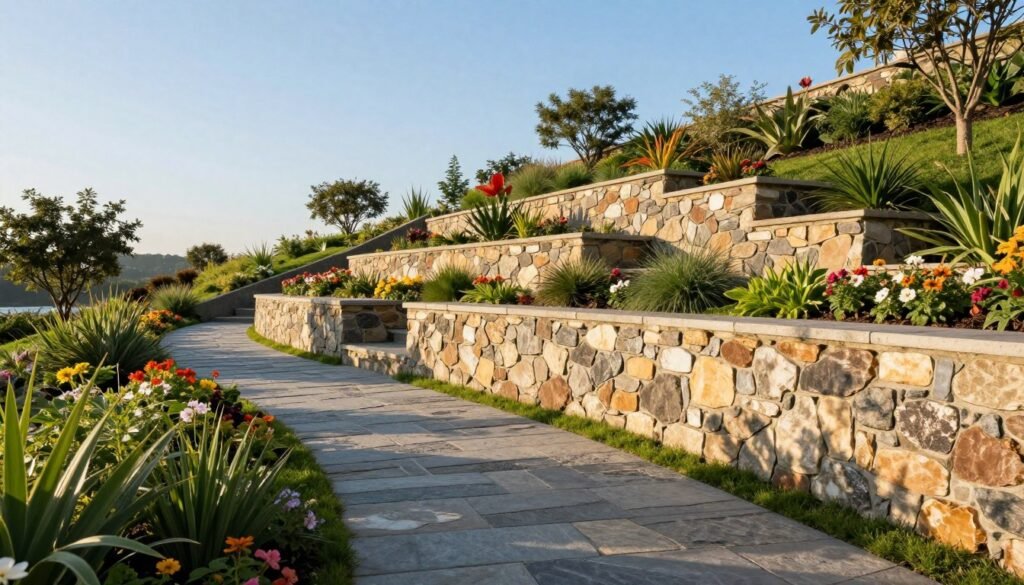
A hardscape project can be as small as a path or as substantial as a wall that reshapes how a sloped yard is used. Hardscaping covers built, nonliving features that help you move through or use the landscape.
Common features include:
- Patios for seating or dining
- Walkways between yard areas
- Retaining walls that hold soil
- Fire pits for gathering
- Water features for sound or interest
- Pergolas for shade over a sitting area
Surfaces for walking, sitting, and gathering
Patios and walkways create firm places to sit, gather, and travel across a property. Their shape and location can help make a steep yard easier to use.
Features do not need to touch the ground to count. A pergola is a hardscape feature, even though it stands above a patio or another surface.
Structures that shape a change in grade
A retaining wall is a structure that holds back soil to create a more stable or usable level on a slope. It can support a flatter area, such as a small terrace for a patio.
The right hardscape depends on the task, not the size of the build. Before choosing a feature, identify the everyday task it needs to make easier.
How Hardscape and Softscaping Work Together
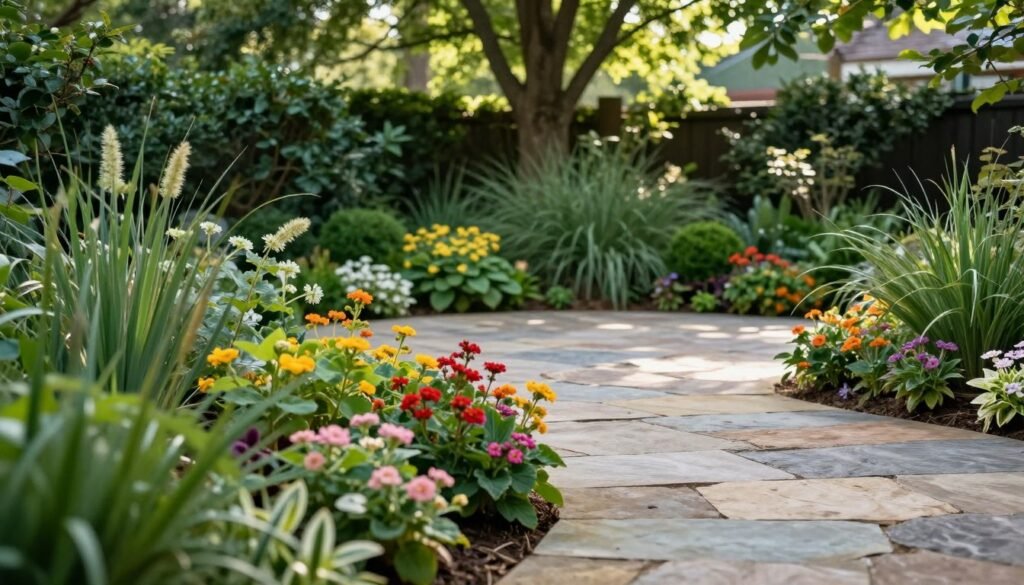
Softscaping is the living layer of a yard, including plants, grasses, shrubs, and trees. A complete landscape combines these living elements with hardscape features.
Planting can soften the edge of a patio or retaining wall and help built areas feel connected to the rest of the property. For example, a planting bed beside a path can make the route feel like part of the garden.
Plants can also add seasonal color and shade around outdoor living areas. Their placement matters, since mature growth can cover a walkway or crowd a structure.
A yard made only of built elements may feel stark, while plants alone may not provide clear routes or useful places to sit. Each kind of element serves a different purpose.
Landscaping means the overall design and care of an outdoor property. It combines and arranges living and nonliving elements so the space works as a whole.
Consider how planting will look beside the hardscape both now and as it grows. Leave enough room for plants to mature without obscuring a path or putting pressure on a wall.
Which Hardscaping Ideas Make a Sloped Yard More Usable?
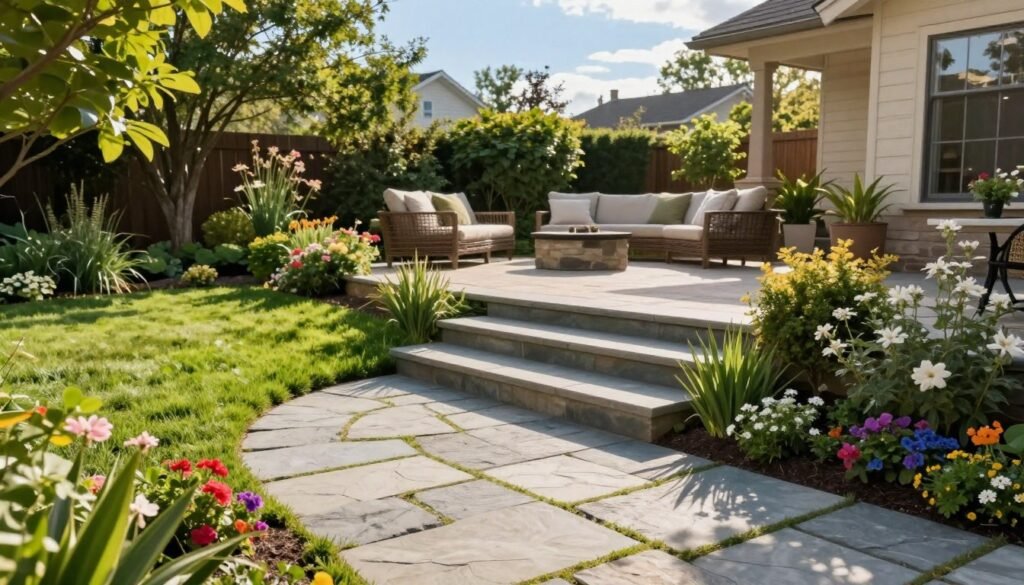
A useful slope design connects a few destinations rather than treating the entire yard as one large project. A path can lead to a landing, patio, or fire pit, giving each area a clear purpose.
Choose routes and gathering places that suit the way people move through your outdoor space. A short walk from the home to a patio may matter more than access to every corner.
Connect levels with paths and steps
Steps can connect different elevations and provide stable transitions. A walkway can link the home or patio to another destination while helping direct runoff away from the house.
A sharply sloped route may need landings and turns, rather than one direct line. That change in direction can make the walk feel less abrupt.
| Feature | Main use | Suitable setting on a slope | Planning consideration |
|---|---|---|---|
| Steps | Connect elevations | Route with manageable grade | Provide stable transitions |
| Walkway | Connect yard zones | Link home or patio to a destination | Direct runoff away from house |
| Patio | Create dining or seating area | Level area or supported terrace | Keep main route clear |
| Fire pit | Create gathering point | Accessible area with clearance | Check local fire and safety rules |
Create a destination for sitting or gathering
A patio can turn a level part of the yard into an outdoor living space for meals or quiet time. Pavers offer one way to form a firm surface, while a fire pit can give a gathering area a clear center.
Rocks or garden structures can look balanced in odd-numbered groups, such as 3, 5, or 7. This is a visual-design option, not a rule for every space.
Walk the route from the door to each planned destination before fixing feature locations. Test the walking route from the door to each destination before fixing the feature locations.
How Should You Plan for Water, Stability, and Local Approvals?
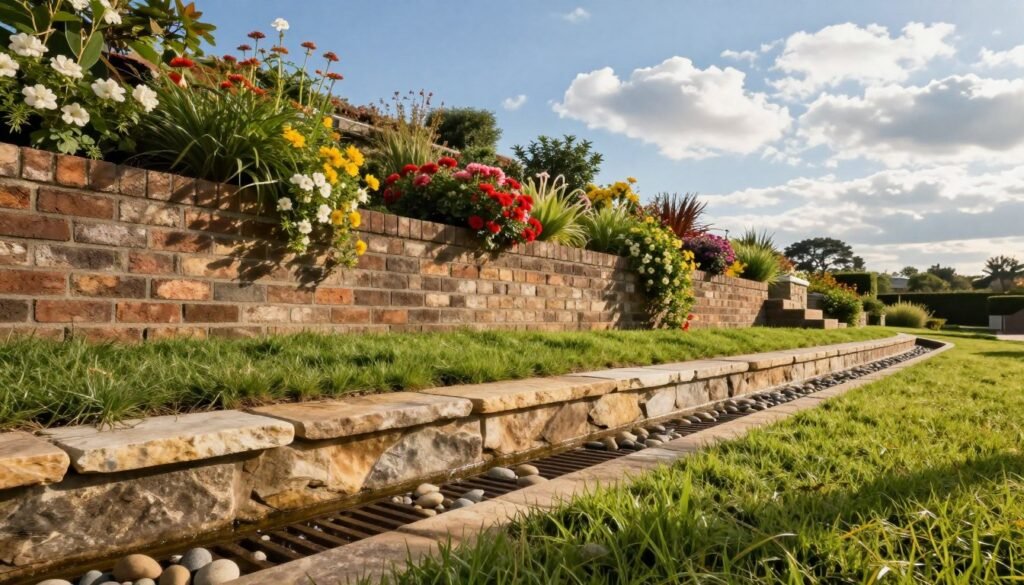
Water needs a planned route off the slope before a patio, path, or wall fixes the yard’s layout. Poor grading or runoff can cause pooling and send water toward a foundation.
Planning and installation may involve excavation, compaction, leveling, drainage, and a properly prepared base. Some structures also need foundations below the frost line.
Retaining walls over 4 feet and concrete retaining walls typically need reinforcement, such as steel rebar or extra foundation material. Reinforcement conditions for walls do not establish the local permit threshold by themselves.
Direct water away from structures
Plan where runoff will go before placing hardscape features. Water that collects behind a wall or beside a home can damage the project or nearby structures.
Keep these site checks in the project plan:
- Local building or planning rules
- Grading and stormwater requirements
- Easements and property boundaries
- Utility locating through 811 before digging
- Whether the design needs engineering review
Check requirements before excavation
Rules can depend on the work, the site, and local requirements. A wall’s height or construction type may affect reinforcement needs, but that does not set a universal permit rule.
Confirm the applicable local requirements before excavation, especially when the work changes grading or supports soil.
What Materials and Installation Costs Should You Budget For?
The material price is only one part of a hardscape budget, because preparation, drainage, and skilled installation can change the finished cost. Compare material-only prices separately from labor and installed project rates.
In 2026, landscaping construction crews and skilled hardscape installation cost $50-$120 per hour. The paver prices below cover materials only, not site preparation or labor.
Compare paver and aggregate materials
| Paver material | Material cost | Unit |
|---|---|---|
| Concrete | $2-$25 | Per square foot |
| Brick | $4-$15 | Per square foot |
| Natural stone | $8-$30 | Per square foot |
| Porcelain | $12-$35 | Per square foot |
| Retaining-wall blocks | $10-$28 | Per square foot, materials |
In 2026, bulk gravel and crushed stone average $10-$50 per ton. Pea gravel costs $30-$65 per ton, river rock costs $45-$110 per ton, and large landscape boulders cost $150-$350 per ton.
Mulch prices are also listed by volume. Natural brown mulch costs $32-$40 per cubic yard, dyed mulch costs $35-$45, and premium cedar bark mulch costs $50-$60.
Separate material costs from installed wall costs
Retaining-wall blocks cost $10-$28 per square foot for materials, while installed walls range from $25-$110 or more per square foot. A national 2026 estimate puts the average wall installation at $6,300, with a typical range of $3,500-$9,400.
Wall waterproofing is estimated at $2-$10 per square foot. The wall’s size, site preparation, drainage, and construction details affect the total.
Freeze-thaw performance depends on the paver, base layers, drainage, and installation method. For concrete pavers in freeze-thaw exposure, consider ASTM C936 and ASTM C1782.
Check product documents for the test method, exposure cycles, and exposure medium. Look for reported deterioration or mass loss, acceptance criteria, sample identification, and a match to the product currently supplied.
Compare estimates only after checking that each one includes the same preparation, drainage, material quantity, and installation scope.
Which Plants Help Stabilize a Steep Slope?
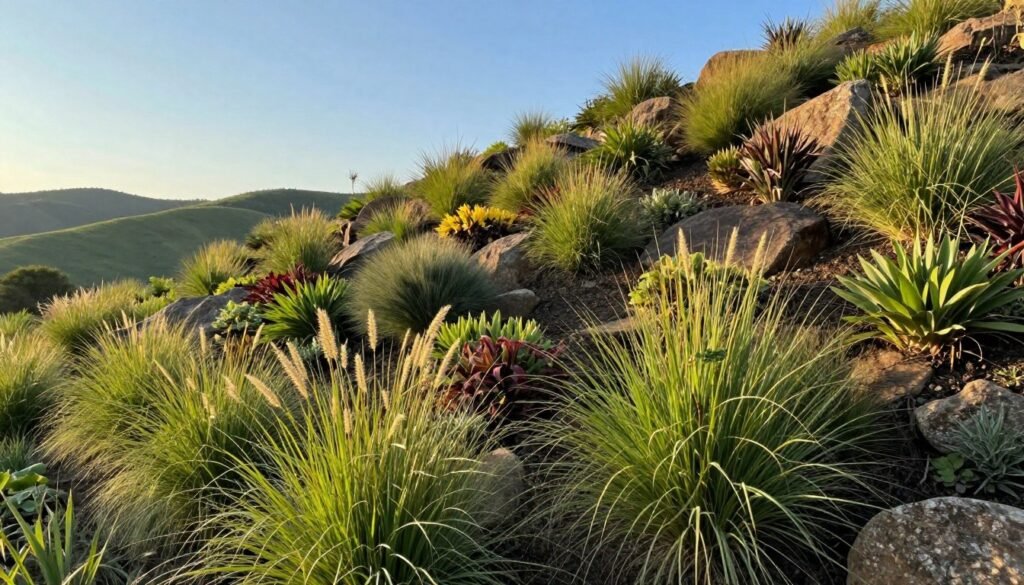
On a steep slope, favor native plants with extensive roots and the ability to tolerate dry conditions. Their roots can help hold soil, and drought tolerance can help plants cope with exposed ground.
Fast-spreading native choices include inland sea oats (Chasmanthium latifolium) and golden ragwort (Packera aurea). Switch grass (Panicum virgatum) and little bluestem (Schizachyrium scoparium) can help control erosion.
Choose plants suited to the site
Plant choice should fit the exact site and local growing conditions. Sun, soil, and moisture can vary across one slope, so check how each area differs before planting.
Deep or spreading roots can help anchor soil, while plants that tolerate dry conditions may need less care once established. Match the plant to the slope rather than relying on a name alone.
Protect seed as it establishes
New seed needs protection while roots begin to grow. Straw or a biodegradable erosion-control blanket can cover exposed ground and help keep seed in place.
Keep the surface covered during establishment, especially where runoff crosses bare soil. Protect exposed seed while it establishes, instead of leaving loose soil vulnerable to runoff.
How Do You Choose a Contractor and Care for the Finished Work?
A useful contractor estimate explains how the work will be built, not just what the finished feature will cost. A local search for hardscaping contractors near me should lead to a scope-based comparison, not a choice based only on the lowest total.
Compare 3 written estimates with matching details for scope, base preparation, drainage, materials, schedule, and cleanup responsibility. Homeowners in Roanoke can request local landscape and hardscape quotes for project planning.
Simple edging may suit DIY work, but walls, grading, and drainage require more skill. Ask each contractor to describe the work sequence and who handles site cleanup.
Routine care helps keep paths and patios usable. Common tasks include:
- Clean the surface.
- Remove weeds from joints.
- Replace broken pieces.
- Remove mold or mildew with a method suited to the material.
Keep the approved scope and care instructions with the property records so future repairs can match the original work.
Conclusion
A sloped lot can support a more useful outdoor living space when its built features work with the terrain and water flow. A stable route or gathering place needs to fit the site, with planting that suits the ground.
Begin with a simple property sketch. Mark the main destinations and the visible paths that rainwater follows across the yard.
That drawing gives you a clear way to describe the work and compare proposals. Sketch the routes, gathering areas, and runoff paths you want to address, then use that plan to discuss the project with qualified local professionals.