
Can outdoor patios in Roanoke stay level on clay, or is sinking inevitable? Use at least 8 inches of gravel base for a pedestrian patio over clay and at least 12 inches for vehicular loads. Typical patio and walkway bases are 6-8 inches in established areas and 8-10 inches in newer developments; compaction, drainage and expected load shape the site-specific design.
A compacted aggregate base is crushed stone compacted beneath the bedding layer to distribute loads and support the patio surface. Knowing what lies below the pavers helps you plan for spring weather, spot trouble early and make repairs that last.
Key Facts
- Pedestrian areas over clay need at least 8 inches of gravel base.
- Vehicular applications over clay need at least 12 inches.
- Typical patio bases run 6-8 inches in established areas, and 8-10 inches in newer developments.
- Virginia has more than 880 mapped soil series.
- NOAA climate normals cover 1991-2020 and were released in 2021.
- A 2026 Virginia guide says surfaces more than 16.5 inches above finished grade need a building permit.
Treat those base figures as starting points, not a substitute for matching the design to the site.
Why Do Outdoor Patios Sink in Roanoke, VA?
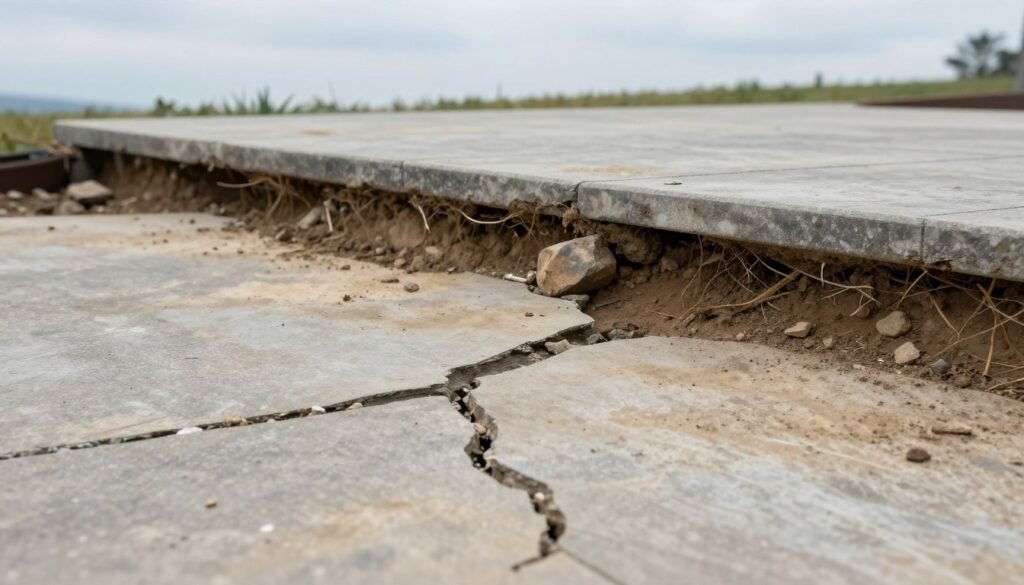
A patio can sink even when its pavers are intact if the ground beneath them loses support. Water, uneven ground support and the weight placed on the surface can work together to cause movement.
Pavers pass loads through their joints, bedding sand and compacted aggregate base. If one part of that assembly rests on softer ground, the surface may settle there while nearby pavers stay level.
Outdoor patios near Roanoke, VA need a site check for clay, drainage and expected load before the base is specified. The spot matters: a small dip near a downspout suggests a different issue from a broad drop across the seating area.
Water can soften soil or enter gaps in the paver assembly. When support changes from one part of the patio to another, the surface may shift unevenly instead of sinking as one flat piece.
The planned use also affects support needs. A quiet garden space with chairs places different demands on the ground than an area used for heavy outdoor equipment.
Watch how the surface changes across its full span. A single loose paver may have a local cause, while a steady slope or several low areas can point to wider movement.
Look for a pattern of movement across the whole surface before blaming one loose paver.
How Does Virginia Clay Soil Shift Beneath a Patio?
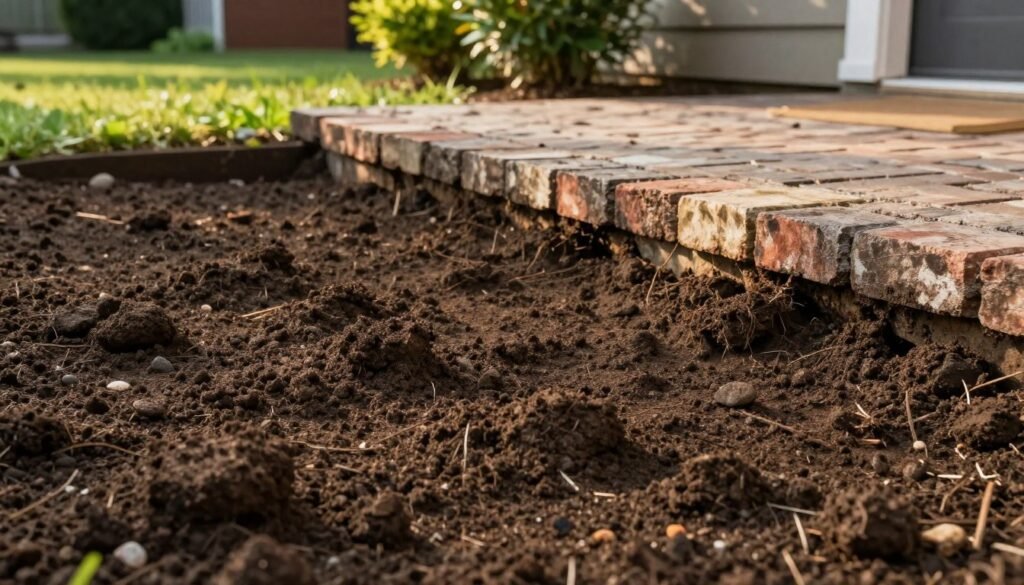
Clay-rich subsoil can change volume as moisture rises and falls, shifting the support beneath a hard surface. The effect depends on the soil at that place and how water moves through the yard.
Some Ridge and Valley soils have clayey subsoils that shrink and swell as they wet and dry. The change can affect the ground under a patio even when the pavers themselves remain sound.
Ridge and Valley clay that shrinks and swells
Carbo and Endcav are examples of Ridge and Valley soils with clayey subsoils that shrink and swell dramatically. Their behavior shows why a hard surface can move as the ground beneath it changes with moisture.
Wet clay can expand, then contract as it dries. That cycle can change how firmly the ground holds the patio assembly, especially where soil conditions vary across the site.
Why neighboring lots can behave differently
Two nearby lots may have different soil layers, even when their lawns look much the same. Fill, grading, past construction and natural soil changes can all create different conditions beneath the surface.
A garden’s topsoil does not show the full subsoil profile. A level lawn beside a patio cannot confirm that the deeper ground has the same texture or support across the whole space.
Virginia has many mapped soil series, and a neighborhood name cannot tell you which profile lies under one particular patio. A mapped unit is a useful clue, but field conditions can vary within a property.
Pay attention to where a low area begins and ends. Movement limited to one corner may reflect a local soil change rather than the same conditions found beneath the entire patio.
Treat a soil description as a clue about the lot, not proof that every part of the garden has identical ground.
How Do Freeze-Thaw Cycles Affect Patio Stability?
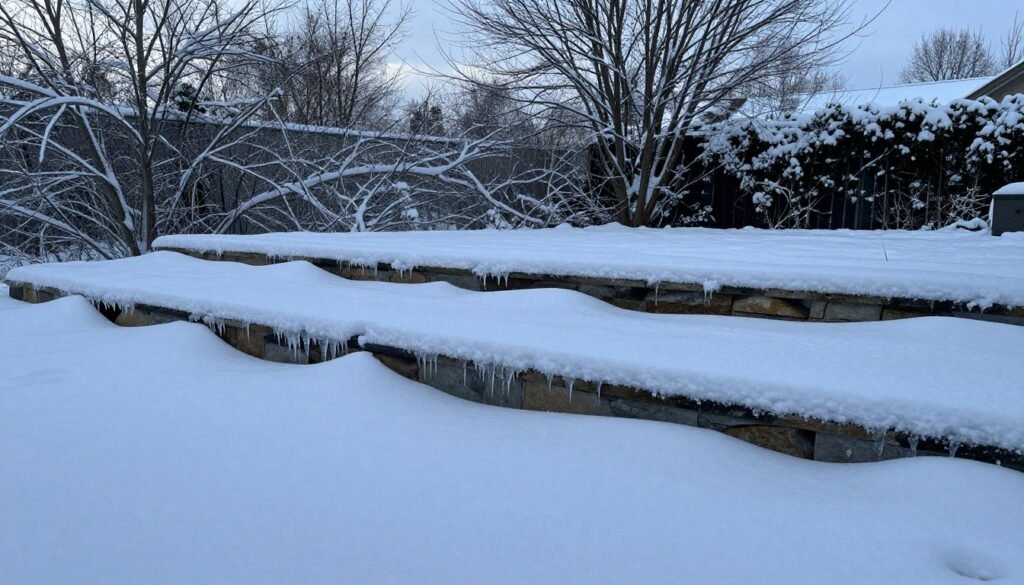
A wet base can move when water freezes and thaws, especially where compaction and drainage are poor. The repeated change can disturb loose material and reduce even support beneath a patio.
Water in soil and open spaces can freeze, then thaw as temperatures shift. That movement may loosen or displace material beneath pavers, particularly where the base was not compacted evenly.
Freeze-thaw is a possible weather mechanism, not proof of what caused a specific dip. A low spot can also reflect changing soil support, a runoff path or a construction issue.
NOAA’s U.S. Climate Normals use temperature and precipitation data from almost 15,000 weather stations. The latest standard normals cover 1991-2020 and were released in 2021.
Those climate records describe broad weather patterns over time. They do not count the freeze-thaw events beneath one patio or show which part of a yard held water.
Look at when the surface shifts and what the weather was like before you conclude. A change after wet winter weather may be a useful clue, but it does not identify the cause by itself.
Check whether a dip appears in one area or grows over time. That record can help separate a brief seasonal change from movement that continues through different conditions.
Compare the patio’s movement with its wet-season and winter conditions before settling on a cause.
What Makes a Gravel Base Stable Under a Patio?
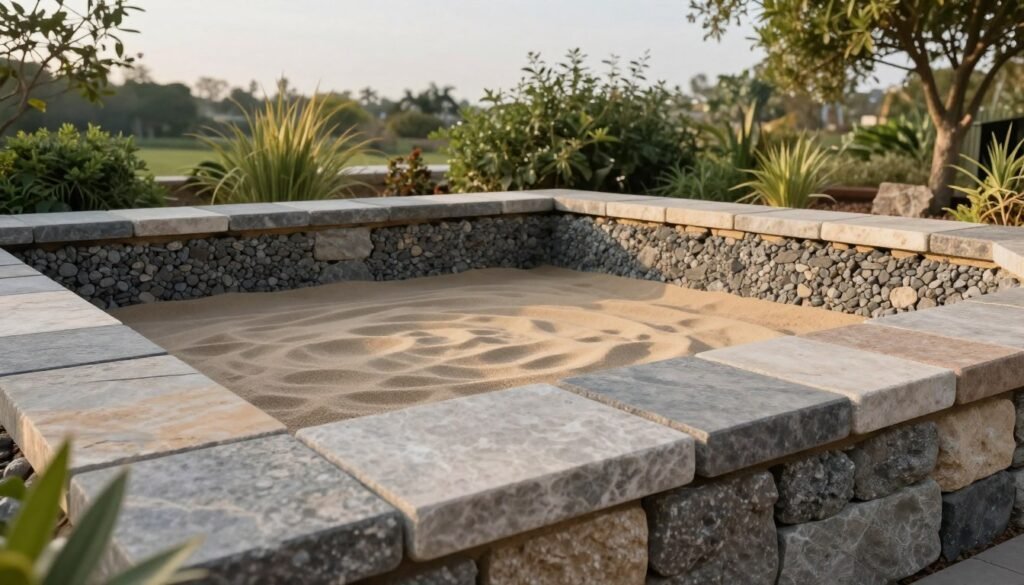
A durable paver base works as a layered assembly, not as a thick pile of loose stone. A prepared subgrade, compacted aggregate base, bedding sand, and edge restraints each serve a different purpose.
Soil compaction, soil drainage, and the load the surface must bear help determine the base design. A dining area with tables and chairs may be used differently from a lawn path or a space for heavier items.
- Prepare and compact the subgrade so the base has firm, even support.
- Place aggregate in compacted lifts rather than spreading one loose layer.
- Screed bedding sand evenly to create a setting bed for the pavers.
- Secure the perimeter with edge restraints to hold the pavers in place.
The subgrade is the soil beneath the stone. Remove soft or disturbed material as part of preparing it, then compact the remaining ground before adding aggregate.
Compacting aggregate in lifts helps create a more even support layer. Loose stone can shift under weight, leaving some pavers with less support than others.
Bedding sand levels individual pavers and helps create an even surface. It does not replace the load-bearing compacted aggregate base beneath it.
That difference matters when you plan a seating space. Adding sand alone may make a paver look level for now, but it does not strengthen a weak base.
Edge restraints hold the outer pavers in place. Without a firm perimeter, movement at the edge can let the field of pavers spread outward.
Check that the perimeter is restrained, since an unsupported edge can let pavers spread.
How Should Patio Drainage Work on a Clay Lot?
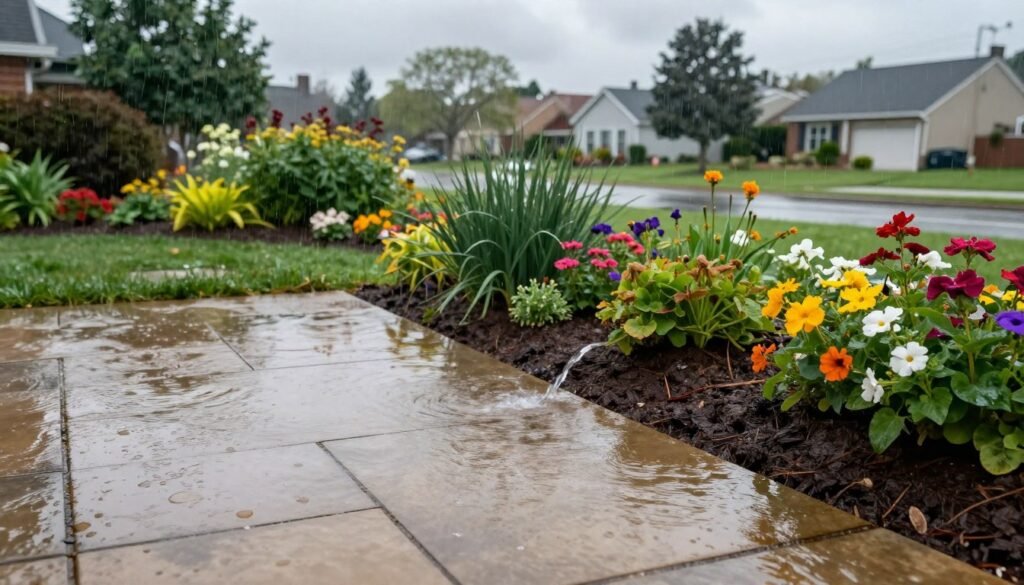
If rainwater repeatedly pools beside a patio, the surface and the surrounding grade need a drainage check. Water from the patio and water from other parts of the yard can reach the same edge.
A commonly used rule of thumb is about 1/4 inch of fall per foot away from buildings. The right grading for a property must also account for local requirements and where runoff will go.
- Watch where runoff travels across the patio during rain.
- Check whether the surface drains away from the house.
- Inspect where downspouts discharge water.
- Look for puddles that remain at low edges.
Downspout discharge and surface runoff are separate water sources. Both can saturate the same patio edge, even if only one is easy to see during a quick inspection.
Observe the ground beyond the patio, too. A lawn or garden bed that slopes toward the pavers can send water to the same low point after a storm.
Planning the route for runoff before changing hardscape can reduce trouble near a house or neighboring property. A guide to hardscaping a sloped lot also covers patio placement, paths and drainage.
Do not send runoff toward a house or another property while correcting a patio edge. The goal is a safe route for water, not simply a dry spot beside the pavers.
Observe the area during or just after rain, when the actual runoff path is easiest to see.
What Are the Signs That a Patio Is Settling?
A rocking paver, an opening joint and a broad dip point to different parts of the patio assembly. These visible signs can guide your first check, but they do not prove the cause.
A straightedge and level can help reveal a dip or a change in slope. Compare adjacent areas rather than judging one paver by sight alone.
| Visible sign | Likely area to inspect | What the check may show |
|---|---|---|
| Rocking pavers | Support beneath the block | Uneven contact or a local void |
| Open joints | Paver alignment | Blocks may have shifted apart |
| Localized dip | Small affected area | A low point beside stable pavers |
| Separating edge | Perimeter restraint | Movement at the patio boundary |
Rocking pavers may move when you step on one side. That motion can help you locate a loose place, though it does not tell you how far the problem extends.
Open joints can form when pavers shift out of line. Check whether the gaps appear in one small spot or continue along a longer stretch.
A broad dip can change how chairs sit or how water crosses the surface. Use a straightedge to compare its height with nearby pavers.
A separating edge may show that the perimeter has moved. Compare the boundary with the rest of the patio and note whether the gap is growing.
These signs are clues, not firm diagnoses. Record what you see and where it appears before deciding which parts need a closer look.
Photograph the same spot after rain and again when dry to make gradual movement easier to notice.
Can a Sinking Patio Be Repaired, or Should It Be Rebuilt?
A localized dip in otherwise stable pavers may be repairable without rebuilding the entire patio. The right scope depends on whether the movement is limited or keeps returning across a wider area.
When the blocks remain intact, you can lift and reset a small affected area. Recurring movement over a larger space calls for inspection of the support and water path beneath it.
When resetting pavers may be enough
A localized reset can fit when nearby pavers remain stable and the affected blocks are not damaged. Lift the blocks, correct the support below them, then relay them evenly.
A small repair may suit a single area near a step or seating space. The goal is to correct the support, not just hide the low spot with added sand.
When the base needs broader rebuilding
Repeated dips across a wider section suggest that surface work alone may not last. Check the subgrade, compacted aggregate base and runoff before relaying the pavers.
Damaged blocks may need replacement, while sound blocks can often go back after the support is corrected. A broader repair may involve taking up more of the patio to reach the affected layers.
| Repair scope | When it may fit | Work involved |
|---|---|---|
| Localized reset | Movement confined to a small area | Lift blocks and correct local support |
| Partial base rebuild | A wider section moves repeatedly | Remove pavers and rebuild part of the base |
| Full-area rebuild | Movement affects much of the patio | Rework the assembly across the full surface |
For wider work, match the repair to how you use the space, from quiet seating to a busy outdoor area. Custom backyard construction can include patios designed for the home and intended use.
Repeated movement can point to a problem below the pavers, not a defect in every block. A careful assessment helps avoid lifting more of the surface than the repair requires.
If the same area sinks again after repair, investigate the base and water path instead of repeating a surface-only fix.
Do Roanoke Patio Repairs or Retaining Walls Need Permits?
A simple on-grade patio and a patio project with a roof or electrical work do not raise the same permit question. Permit needs depend on the project design and the local authority.
A 2026 Virginia patio-permit guide says an on-grade concrete or paver patio needs no building permit when it is not designed to support a future building addition. Roofed patio covers and electrical work, such as lights or outlets, require permits.
Virginia’s 2021 Uniform Statewide Building Code became mandatory for applications and plans beginning January 18, 2025. A simple surface repair differs from adding a roof, wiring or a structure.
Roanoke defines a retaining wall as a wall that restrains lateral soil forces and retains soil at a height no greater than necessary. Under that definition, it must not support or provide a foundation or wall for a building or other structure.
A wall project can involve more than the patio surface. Changes to how soil is held in place may affect the project’s design and the permit question.
Do not assume a repair has the same permit status as a larger redesign. Roofs, electrical features and wall work can change the scope that the building department reviews.
Confirm the proposed scope with the local building department before construction begins.
How Can You Check the Soil Before Fixing a Roanoke Patio?
A soil map can narrow the questions to ask, but it cannot confirm every condition beneath one patio. Use it as an initial check, then compare the map with what you see on the property.
The NRCS Web Soil Survey is an online mapping application for soil survey data where digital spatial data are available. Soil surveys show texture, including clay content, and rate shrink-swell potential for soils high in clay.
Read the soil survey for texture and shrink-swell potential
Texture describes the mix of soil particles, including clay. A shrink-swell rating can signal a greater chance of volume change in soils high in clay.
Virginia soils are generally clayey in the subsoil outside the Appalachian Plateau, where soils tend to be loamier and rockier. Coastal Plain soils are loamy, with little rock and more sand.
| Virginia region | General soil profile | What the map can help check |
|---|---|---|
| Outside the Appalachian Plateau | Generally clayey subsoil | Texture and shrink-swell rating |
| Appalachian Plateau | Loamier, rockier soils | Mapped soil texture |
| Coastal Plain | Loamy, little rock, more sand | Texture and water movement clues |
Compare the mapped soil with conditions in the yard
A mapped soil unit covers an area, not one exact patio footprint. Soil texture or water flow can change across a yard, so compare the map with the ground you can see.
- Locate the property in the NRCS Web Soil Survey.
- Inspect the soil texture and shrink-swell information.
- Compare the map with visible drainage and site conditions.
Exposed soil near a bed or garden can offer clues about texture. A map remains an initial guide, since backyard conditions may differ within the mapped area.
The Virginia soil and drainage guide explains how soil surveys help describe soil and water movement. Compare those general details with the patio’s actual setting.
Use the map to guide a site inspection, not to replace one.
Conclusion
A stable patio starts with understanding the ground and water beneath it. Match the design to the soil, runoff and expected load, rather than focusing on the pavers alone.
Before planning work, inspect the affected area after rain and locate the property in the soil survey. Note where water collects and whether the movement stays local or reaches a wider part of the patio.
Those observations can help you describe the problem and choose a suitable repair scope. Record the wet-weather pattern and soil-map details before deciding what repair scope to pursue.