
Steep residential slopes across Blacksburg create severe water runoff, topsoil erosion, and compromised retaining walls that destabilize home turf and outdoor spaces. Sloped Lot Lawn Care, Drainage & Retaining Wall Solutions in Blacksburg, VA resolve these hillside pressures by combining structural gravity walls, subterranean drainage networks, and targeted soil stabilization.
Site slope, native clay density, water volume, and foundation proximity determine the structural engineering and turf restoration methods required for lasting hillside performance.
Project Costs and Engineering for Sloped Blacksburg Lots
Hillside grading, retaining wall installation, and drainage correction require careful planning and site-specific material sizing. Project costs on sloped Blacksburg properties typically fall into two primary investment brackets depending on structural height, excavation difficulty, and required earthwork.
| Investment Range | Wall Height | Primary Scope | Engineering Components |
| $8,000 to $15,000 | Under 4 feet | Low replacement walls | Targeted French drains, site re-grading, and localized sod installation |
| $15,000 to $30,000 | 4+ feet | Structural retaining walls | Multi-tier terracing, deep aggregate base excavation, comprehensive runoff redirection, and full turf renovation |
Several technical factors drive project pricing on regional properties:
- Excavation access on steep hillsides where compact machinery must navigate narrow property lines and sharp elevations.
- Aggregate backfill depth, which requires clean crushed stone behind block faces to relieve water buildup.
- Geo-grid reinforcement embedded between block courses to tie the structure securely into the hillside soil mass.
- Drainage pipe routing that carries high-volume surface and subsurface water away from residential foundations.
- Heavy mountain clay soil removal, requiring off-site hauling and replacement with structural gravel backfill.
Project ranges serve as planning estimates rather than fixed quotations. Specific terrain grades, machine access limits, utility locations, and civil structural engineering requirements affect final scope recommendations.
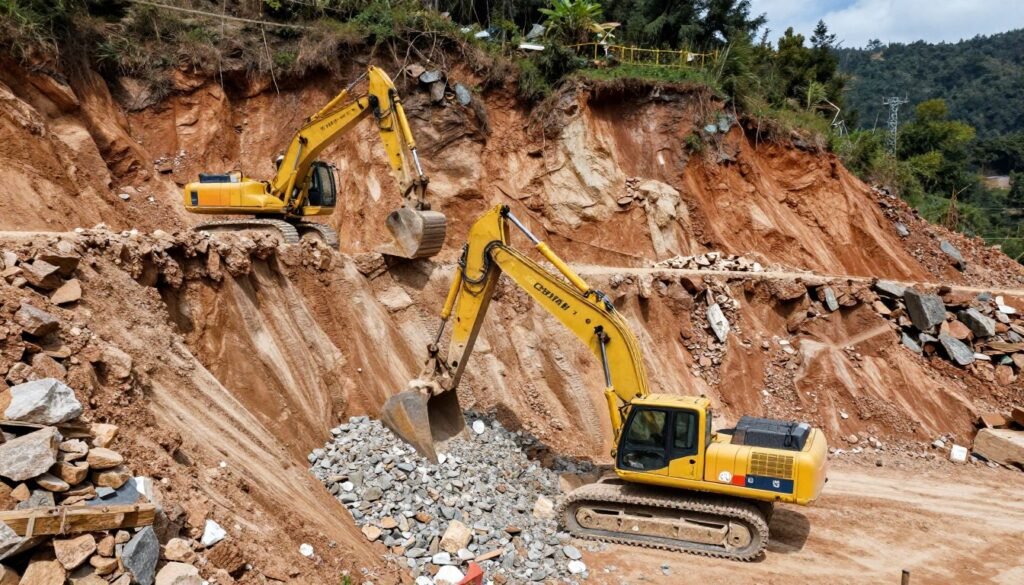
Base excavation and aggregate backfill preparation create the structural foundation for hillside stability.
Solving Blacksburg’s Sloped Lot and Lawn Care Challenges
Hillside properties require coordinated hardscape construction, hydrological management, and turf cultivation rather than cosmetic surface repairs. Addressing water collection and grade failure requires a unified exterior plan.
Retaining Walls & Stabilization
Segmental block walls, dry-stack gravity walls, and terraced stone structures support steep grades in dense Appalachian clay. Proper base leveling, structural backfill, and geo-grid reinforcement prevent tilting, lateral movement, and catastrophic blowouts.
Integrated Landscape Drainage
Curtain drains, perforated French drain systems, surface catch basins, and buried downspout lines capture storm runoff. Moving subsurface water safely downslope prevents saturation behind walls and stops surface sheetwash from gutting lawn soil.
Hillside Turf & Erosion Control
Steep slope lawn restoration combines core aeration, organic soil conditioners, and turf-type tall fescue overseeding. Deep root networks anchor loose topsoil along grades, preventing rain rills and bare clay patches on Brush Mountain slopes.
Maintaining thick, erosion-resistant turf on sloped mountain properties works hand-in-hand with functional drainage networks. Property owners looking to protect their hillside grade and turf density can coordinate their seasonal schedule through comprehensive lawn care and property maintenance services.
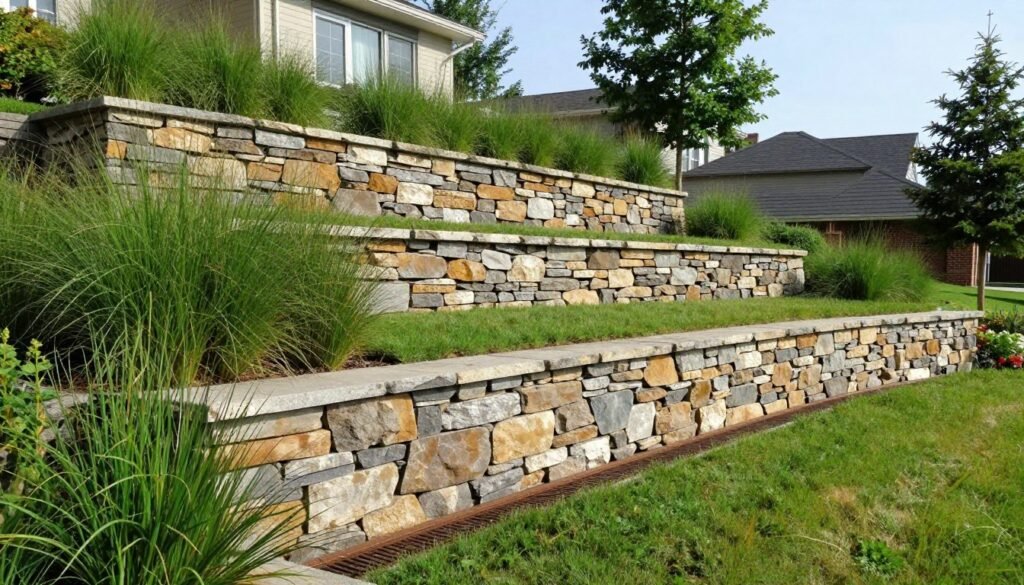
Terraced block systems reduce soil velocity and establish stable, level lawn zones on steep mountain lots.
Local Blacksburg Geology and Climate Factors
Regional soil profiles and Appalachian weather patterns place unusual physical strain on retaining systems and hillside lawns. Heavy clay and shale subsoils across Montgomery County drain poorly, trapping high volumes of ground moisture after seasonal storms.
Sub-zero winter temperatures trigger repeated freeze-thaw cycles that expand trapped moisture, exerting massive lateral pressure against unreinforced wall faces. Deep clean gravel backfill and continuous drain pipe allow water to escape before hydraulic pressure causes structural displacement.
Uncontrolled water flowing down ridges near Tom’s Creek or along Prices Fork Road strips away organic topsoil and pools against vertical obstacles. Installing perforated pipe networks wrapped in non-woven geotextile fabric keeps sediment out while channeling water away from turf zones. Homeowners can verify service locations and project examples when they Find Duncan Design & Landscaping on Google Maps.
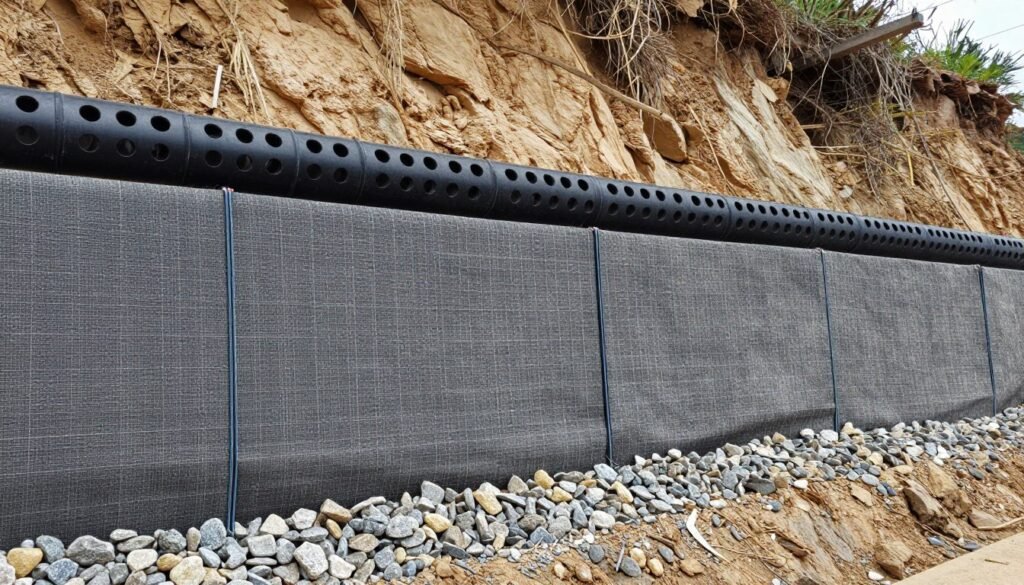
Perforated pipe and clean stone backfill prevent saturated soil from creating dangerous hydrostatic loads.
Regional Service Areas Across the New River Valley
Hillside grade correction, retaining wall engineering, and sloped lawn rehabilitation require experienced local equipment handling and site evaluations. On-site assessments confirm slope elevation, soil saturation levels, machine access corridors, and appropriate drainage layouts.
- Blacksburg, VA (24060), including residential neighborhoods near the Virginia Tech campus, Prices Fork corridor, and Brush Mountain foothills.
- Christiansburg and regional Montgomery County communities experiencing heavy clay runoff and hillside erosion.
- Radford, with a focus on river bluff grades and high-slope residential yards.
- Roanoke County and regional neighborhoods, including Cave Spring, Hidden Valley, and South Roanoke.
Frequently Asked Questions
What causes retaining walls to lean or collapse on sloped lots in Blacksburg, VA?
Walls lean or collapse when hydrostatic pressure builds up behind the wall face due to trapped water in dense clay soil. Without deep gravel backfill and functioning drain pipes, winter freeze-thaw cycles expand the saturated earth and push the blocks outward.
How much does a structural retaining wall and drainage project cost in Blacksburg?
Most residential projects range between $8,000 and $30,000 depending on total wall height, grading demands, and drainage integration. Smaller replacement walls under 4 feet occupy the lower end, while structural systems 4+ feet with multi-tier terracing and extensive earthwork require larger budgets.
Can poor lawn drainage cause my retaining wall to fail?
Poor lawn drainage channels uncontrolled surface water directly behind the retaining structure, saturating the backfill. This excess saturation saturates native clay subsoils, increases lateral soil weight, and undermines the compacted foundation base.
Do I need a building permit for a retaining wall in Montgomery County or Blacksburg?
Permit requirements depend on wall height, site slopes, structural surcharge loads, and municipal building codes. Property owners should verify local regulations with the town or county building department and consult a qualified professional before starting excavation.
How do I schedule a site evaluation with Duncan Design & Landscaping?
Homeowners can schedule an on-site property evaluation by calling 540-566-6400. A field specialist will examine lot elevation, soil profiles, wall stability, and water movement to determine project scope.
Restoring Stability to Hillside Turf and Retaining Structures
Correcting hillside erosion and failing retaining walls requires addressing subsurface water flow, soil composition, and structural support together. Professional site evaluations identify drainage pathways, soil stability, and restoration priorities to create safe, usable outdoor property.
Request an On-Site Hillside Evaluation
Duncan Design & Landscaping | Phone: 540-566-6400 | Serving Blacksburg, Montgomery County, Roanoke & Surrounding Areas