
Managing sloped lot lawn care, drainage & retaining wall solutions in Roanoke, VA requires addressing steep mountain runoff and dense Blue Ridge clay before soil movement threatens structural foundations. Hillside erosion washes away topsoil, destabilizes turf roots, and builds hydrostatic pressure behind aging landscape borders across Southwest Roanoke neighborhoods.
Effective stabilization pairs structural retaining wall engineering with deep aggregate backfill, dedicated sub-surface water diversion, and root-dense turf management. Soil composition, slope severity, and site access dictate whether a property requires targeted French drains, multi-tiered segmental block terraces, or restorative lawn overseeding.
Transparent Cost and Engineering Guide for Roanoke Sloped Lots
Project pricing on steep Southwest Roanoke lots reflects the heavy machinery required to excavate dense clay, haul aggregate, and reinforce hillside earth against gravity. Comprehensive slope stabilization and turf restoration projects typically fall between $8,000 and $30,000 depending on structural scope, structural elevation, and water redirection needs.
| Project Tier | Typical Scope | Primary Focus | Engineering Details |
| $8K to $15K | Low Wall Restoration | Targeted French Drains | Replaces timber or block under four feet, installs targeted yard drainage, and re-establishes localized lawn turf. |
| $15K to $30K | Heavy Terracing | Engineered Retaining Walls | Constructs multi-tier segmental walls over four feet with geogrid reinforcement, deep aggregate backfill, and complete lawn renovation. |
Specific site factors influence where a project lands within these budget bands. Tight side-yard clearances in established neighborhoods limit equipment size, requiring specialized compact machinery or manual labor to remove heavy Roanoke clay. Structural wall height past four feet requires wider base trench excavation, multi-layered geogrid soil reinforcement, and dedicated clean crushed gravel backfill to relieve hydrostatic water load.
Solving Southwest Roanoke’s Sloped Lot Challenges
Protecting hillside residential land requires a unified approach connecting structural earth retention, directed water flow, and resilient grass turf. Addressing only surface symptoms leaves underlying soil moisture unmanaged, allowing seasonal runoff to degrade landscape investments.
Retaining Walls
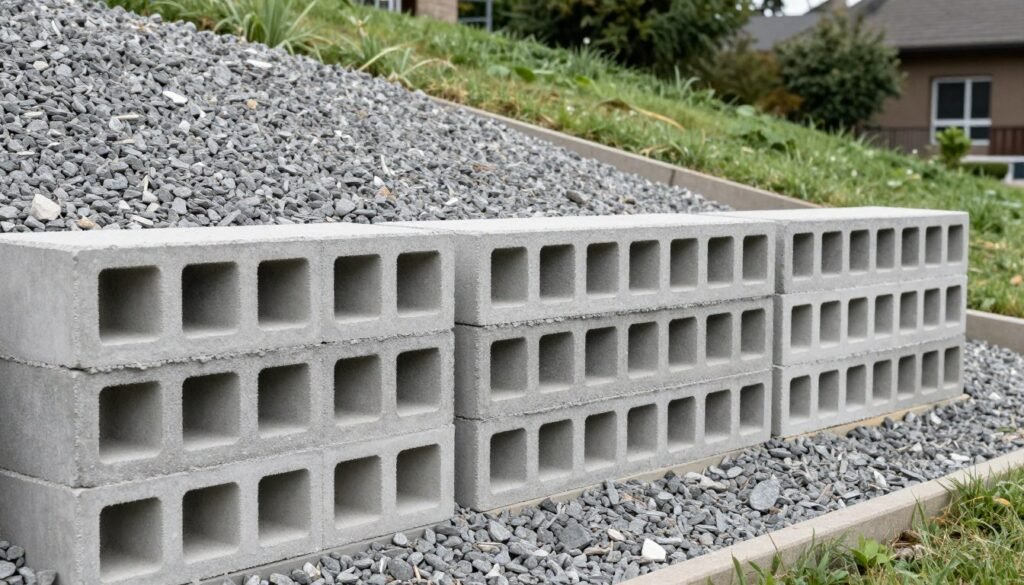
Segmental concrete block, dry-stacked fieldstone, and gravity wall systems stabilize steep Roanoke banks. Base trench compaction and geo-synthetic grid tie-backs lock horizontal soil layers firmly into native embankments.
Drainage Systems
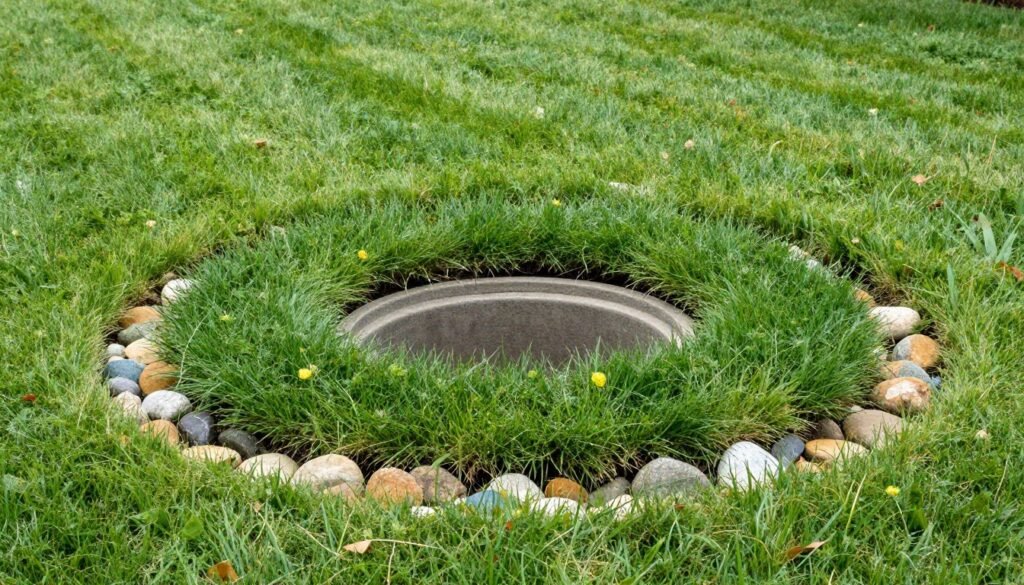
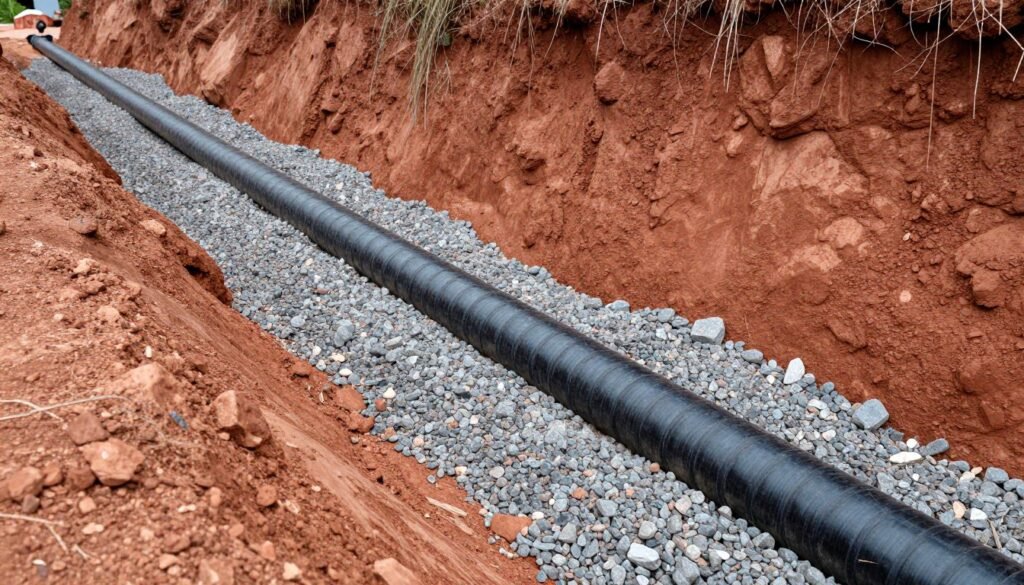
Catch basins, downspout conductor lines, and sub-surface curtain drains capture hillside water before saturation occurs. Perforated collection pipes wrapped in geotextile fabric guide subterranean flow safely away from foundations.
Hillside Lawn Care
Deep-rooting turf varieties and erosion control blankets secure exposed soil on difficult grades. Controlled mowing patterns and seasonal aeration support stable root networks across steep Cave Spring slopes.
Property owners managing steep yards benefit from pairing structural repairs with comprehensive lawn care and property maintenance services to preserve ground cover along vulnerable incline edges. Consistent seasonal turf nourishment prevents bare dirt patches where stormwater collects into destructive rills.
Local Roanoke Geology and Climate Factors
Southwest Roanoke County features dense clay and shale subsoils that swell when saturated and shrink during dry summer stretches. Mountain ridges channel thousands of gallons of surface runoff downward during severe Blue Ridge thunderstorms, quickly saturating unmanaged backfill behind exterior hardscapes.
Sub-zero winter temperatures trigger frequent freeze-thaw cycles that expand trapped moisture in fine clay soils. Without angular gravel backfill and functional drainage perforations, this expanding ice creates lateral frost heave that tilts, cracks, and displaces solid masonry walls.
Proper installations replace moisture-retaining native clays directly behind wall faces with clean, angular aggregate wrapped in non-woven filter fabric. Homeowners seeking reliable regional assessments can Find Duncan Design & Landscaping on Google Maps to coordinate an in-person elevation and soil review.
Geographic Service Coverage Across Roanoke
Hillside grading, water mitigation, and hardscape reconstruction demands change across different elevations and neighborhood ages throughout the valley. Local evaluation teams assess lot topology, boundary clearances, and soil conditions across Roanoke City and Roanoke County.
- Cave Spring: Terraced slope renovations, downspout relocations, and foundation-protecting gravity walls along mature residential plots.
- Hidden Valley: Severe hillside stabilization, boulder retaining systems, and specialized turf maintenance on steep mountain roadsides.
- South Roanoke: Historic lot drainage corrections, stone terrace restorations, and compact equipment excavations on narrow hillside lanes.
- Grandin Village: Yard water redirection, sub-surface trenching, and low-profile segmental block replacements for established urban properties.
- Hunting Hills and Ridgelea: Multi-tier engineering, expansive lot grading, and comprehensive hillside erosion remediation projects.
- Route 419 and Bent Mountain Road Corridors: High-volume runoff diversion and reinforced retaining walls handling steep ridge runoff.
Frequently Asked Questions About Roanoke Slope Solutions
What causes retaining walls to lean or collapse on sloped lots in Roanoke?
Retaining walls primarily fail when water accumulates in the native clay behind the blocks, creating massive hydrostatic pressure. Saturated clay expands further during winter freeze-thaw cycles, pushing unreinforced structures forward when clean gravel backfill and drainage pipes are missing.
How much does a structural retaining wall and drainage project cost in Southwest Roanoke?
Most hillside drainage, retaining wall, and lawn restoration projects range from $8,000 to $30,000 across Roanoke properties. Total costs depend on wall height, site accessibility, excavation volume in dense clay, aggregate depth, and required turf repair.
Can poor lawn drainage cause my retaining wall to fail?
Uncontrolled surface runoff from upper turf areas pours directly behind retaining walls, oversaturating the backfill zone. This concentrated moisture accelerates soil erosion beneath footings and multiplies lateral loads against the wall face.
Do I need a building permit for a retaining wall in Roanoke County?
Permit requirements vary based on total wall height, proximity to property boundaries, slope surcharges, and municipal building codes. Homeowners should consult the Roanoke County Department of Building Safety or local municipal authorities to confirm current structural permit thresholds before starting excavation.
How do I schedule a site evaluation with Duncan Design & Landscaping?
Property owners can call 540-566-6400 to review slope conditions, drainage routes, and retaining wall stability. A field specialist coordinates an on-site visit to inspect soil movement, take elevation measurements, and outline practical solutions.
Stabilize Your Roanoke Hillside Property
Proactive hillside stabilization prevents uncontrolled stormwater runoff from stripping valuable lawn turf and compromising exterior retaining walls. Addressing sub-surface drainage, clay expansion, and structural integrity restores usable outdoor space across steep Southwest Roanoke properties.
Duncan Design & Landscaping
Serving Cave Spring, Hidden Valley, South Roanoke & Surrounding Areas. Call today to schedule an on-site evaluation for your sloped lot, drainage system, or retaining wall.