
Could a custom fire pit be legal in Roanoke if its flames stay inside a steel bowl? A custom fire pit can be legal only if it fits a legal fire category and meets rules for size, separation, fuel, attendance, and smoke. Virginia’s seasonal law may add limits to open-air burning, and screened-fire exceptions have separate safeguards.
A portable outdoor fireplace is a manufactured movable outdoor unit, such as a burn pan, burn pit, or chiminea. The category matters because a fixed fire and a movable unit follow different local placement rules. Your site, chosen fuel, and planned use shape the design before appearance or price.
Roanoke allows qualifying recreational fires as an exception to its open-burning ban, with safeguards for safe use. This open-burning exception helps frame the first design choice. Start by identifying which legal fire category the design must meet.
Key Takeaways
- Identify the fire category your design must meet.
- Map nearby structures and combustible materials.
- Choose the fuel before planning the burner.
- Plan for attendance and smoke control.
- Check whether seasonal state rules apply.
What Rules Apply to a Custom Fire Pit in Roanoke?
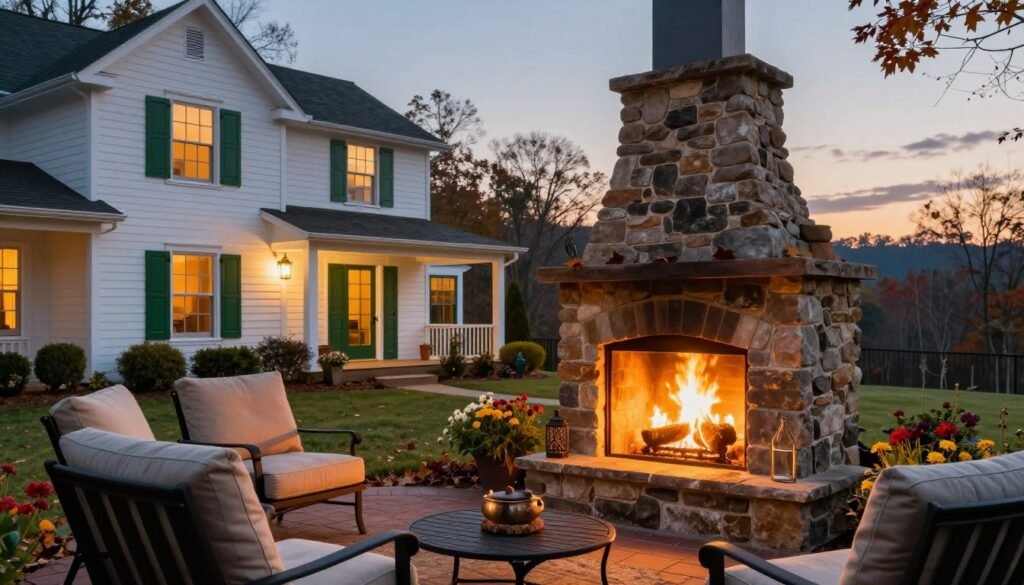
A fire bowl’s legal treatment changes with its use and the type of property around it. Roanoke generally prohibits open burning, but allows qualifying recreational fires and portable outdoor fireplaces under specific conditions.
The city’s open-burning and outdoor fireplace rules set limits on size, separation, fuel, attendance, and smoke. The table shows the required separation for each category.
| Fire category | Minimum separation | Condition |
|---|---|---|
| Recreational fire | 25 ft. | City recreational-fire rules apply |
| Portable outdoor fireplace at a one- or two-family dwelling | No minimum | Only if no evidence of a fire hazard |
| Portable outdoor fireplace elsewhere | 15 ft. | City portable-fireplace rules apply |
How large can a recreational fire be, and where can it go?
A recreational fire must be less than 3 ft. in diameter and 2 ft. in height. It must sit at least 25 ft. from structures or combustible materials, and fire-spread risks within that area must be removed.
A 55-gallon drum can qualify if it burns clean, dry, seasoned firewood no deeper than 2 ft. A custom wood fire pit must use only this permitted firewood, not yard debris, household debris, or trash.
What changes for a portable outdoor fireplace?
Custom chimineas count as portable outdoor fireplaces. They need a screen or mesh cover while operating, and the city’s separation rule depends on the property type shown above.
- Keep every recreational fire below the city’s size limits.
- Limit firewood in a qualifying drum to 2 ft. deep.
- Keep a screen or mesh cover on portable units during use.
- Attend every fire and keep an extinguisher, hose, or water bucket nearby.
- Burn only clean, dry, seasoned firewood, and avoid smoke hazards or nuisances.
Other open burning requires a Fire Marshal’s Office permit. For permit questions, email fire.marshal@roanokeva.gov or call (540) 853-2795; violations may bring up to 12 months in jail and a $2,500 fine. Measure from the feature to the nearest structure or combustible material before fixing its location.
Does Virginia’s 4 PM Burning Law Affect Fire Pits?
A compliant city setup can still face a separate seasonal limit under Virginia law. The Virginia 4 PM Burning Law runs each year from February 15 through April 30, including 2026.
During that period, open-air burning is barred before 4 p.m. when the fire lies within 300 ft. of woods or dry grass that could carry fire to the woods. Burning may take place from 4 p.m. to midnight if someone attends the fire at all times and takes proper precautions.
The state law covers open-air charcoal grills, but not charcoal or gas-fired barbecue grills. It also does not cover fires more than 300 ft. from woods or flammable grass or plants that could spread fire to the woods.
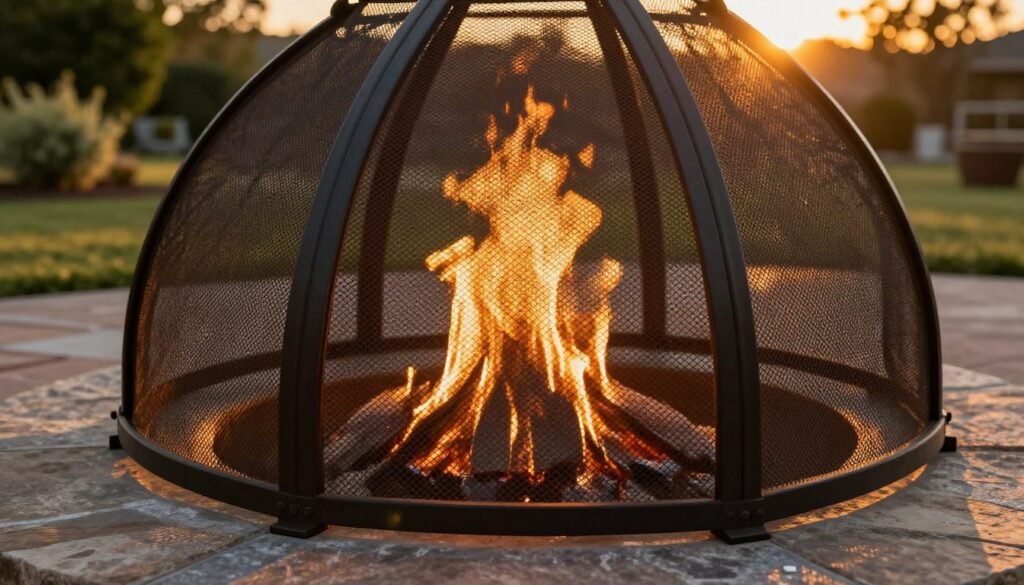
A ring made of rock, cinderblock, metal, or similar material may qualify for the screened-ring exception if a metal screen covers it. Screen openings must be no larger than ¼ inch.
That exception also requires constant attendance, a cleared area extending 20 ft., and water, a rake, and a shovel ready for use. The exemption concerns state seasonal limits; Roanoke’s local rules still apply separately.
A violation is a Class 3 misdemeanor, with a fine of up to $500. If a fire escapes, you may owe suppression costs even after taking precautions and obtaining locally required permits.
Before relying on the screened-ring exception, verify the cleared 20-foot area and have water, a rake, and a shovel ready.
How Should You Choose a Custom Fire Pit Design?
The best match depends on whether firewood, gas, or a drop-in burner defines the project. Compare Roanoke-area fabricators by dimensions, fuel, finish, drawings, delivery, and installation scope.
A custom fire pit near you is easier to source when you compare those details before settling on a layout. If the feature is part of a broader yard plan, review backyard construction options alongside the fire feature.
What should you compare in wood-burning designs and kits?
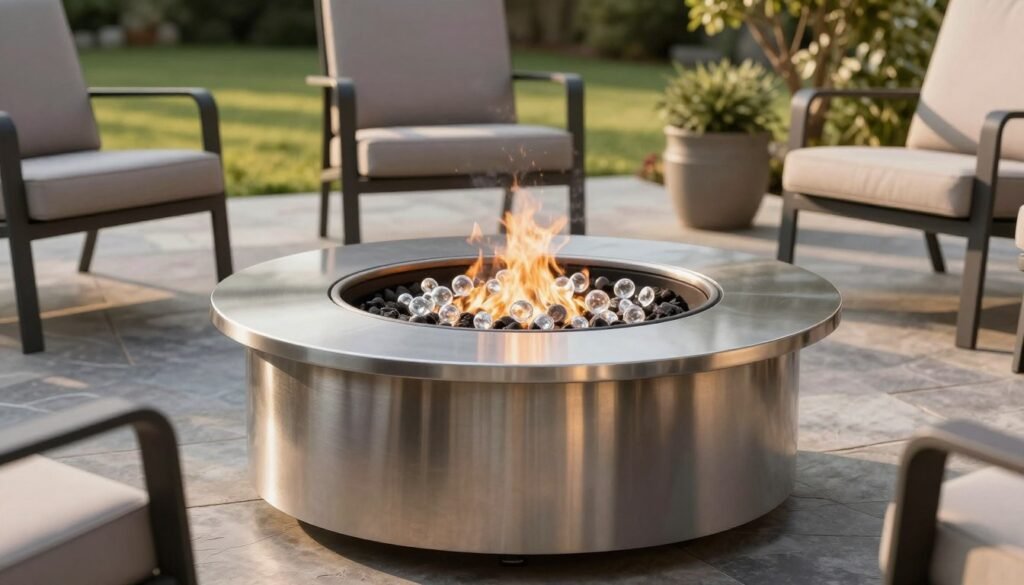
Wood-burning designs need a layout that fits the intended site and local fire category. A drop-in kit is another format, with a metal tray, stainless-steel burner, decorative glass media, and an optional glass screen.
Custom fire pit kits may use ethanol, natural gas, or liquid propane. A wood-burning build has different fuel and use needs, so don’t assume a gas burner can burn firewood.
For a landscape-led plan, hardscaping layouts can help place the feature among patios, walkways, and other yard elements. Drawings should show dimensions and how the feature fits its planned location.
Which metal and fuel specifications deserve a closer look?
Specify a heavy-duty metal fire pit by material, dimensions, finish, fuel, and any cooking surface. Steel thickness should match the design and intended use; one gauge is not a universal standard.
Some liquid propane or natural gas burners carry UL/ULC listing to ANSI Z21.97-2017 and CSA 2.41-2017. A product information page should state the exact fuel and clearances for the selected configuration.
Price depends on size, design complexity, material, finish, burner, delivery, and installation scope. Ask for a quote that itemizes dimensions, material, finish, burner, delivery, and installation.
Conclusion
A well-planned design starts with a legal location and a clearly chosen fuel. Category and placement come before appearance, since a feature’s intended use shapes what can fit the site.
Decide whether the plan calls for firewood, gas, or another kit fuel, then set the design around that choice. The price will reflect the selected build and the work included, so compare itemized quotes rather than a single headline figure.
Confirm any permit question with Roanoke’s Fire Marshal’s Office before committing to a final layout.