
Could a commercial landscape design contract polish your entrance yet spark disputes over irrigation, seasonal work, or extra charges?
A strong contract names the property and covered areas, separates design, installation, and recurring care, and sets service standards and schedules. It also states price, insurance, licensing, and approval rules, while matching planting and seasonal work to Roanoke conditions.
The base contract is the recurring services included in the agreed price, before separately approved extra work.
- Separate design, installation, and recurring care.
- Name the property and each covered area.
- Set service standards and schedules.
- Separate base contract work from extra work.
- Require written change authorization before extra work begins.
A business can have a polished building frontage and still face a dispute over who waters a new bed or pays for added cleanup. Clear terms help you manage client expectations, site access, and billing. Treat every promise that affects access, upkeep, or billing as a written contract term.
Key Takeaways
- List the property zones and work each agreement covers.
- Make service frequency and completion standards measurable.
- Keep extra work separate from the base contract.
- Get written approval before extra work starts.
- Set out design, installation, and care handoffs.
What Contract Type Covers Design, Construction, and Ongoing Care?
A property that needs a new planting plan and weekly upkeep may need a different agreement structure from one that needs design documents alone. Design-only, design-build, and recurring maintenance agreements cover different work and owner decisions.
One agreement can coordinate all three workstreams if it assigns responsibility at each handoff. The ASLA construction contract administration guidelines describe landscape architects’ work across design, construction, maintenance, and warranty roles.
Design-only agreements and construction documents
A design-only agreement may include a site review, concept plans, planting selections, and construction documents. The documents tell an installer what to build, but they do not automatically include installation or later care.
Set the owner approval point before the designer develops final plans. You may approve a concept first, then approve the final plan and material schedule. State whether the designer will answer installation questions or review the finished work.
Design-build and recurring maintenance agreements
A design-build agreement joins planning and installation under one local provider. Deliverables can include a concept, final layout, plant and material schedule, installation, and a completion review. Identify who approves the design, substitutions, and added work.
A recurring maintenance agreement covers ongoing grounds care, such as scheduled turf and bed services. It should state when care begins and which party handles plants or equipment installed by another provider. Recurring services accounted for 55.0% of the global grounds services market in 2026, showing their large role in the industry.
| Agreement type | Included work | Owner approval point | Suitable situation |
|---|---|---|---|
| Design-only | Site plan, planting plan, and construction documents | Concept and final plan | Plans needed for a separate installer |
| Design-build | Design, material selection, and installation | Final design and changes | One provider coordinates a project |
| Recurring maintenance | Scheduled care and stated inspections | Scope and added work | Existing grounds need ongoing service |
When separate firms handle the work, name who gives the installer approved plans and who gives the maintenance provider plant and equipment details. Name who owns each handoff between the designer, installer, and maintenance provider.
How Does Commercial Landscape Design Fit a Roanoke Property’s Goals?
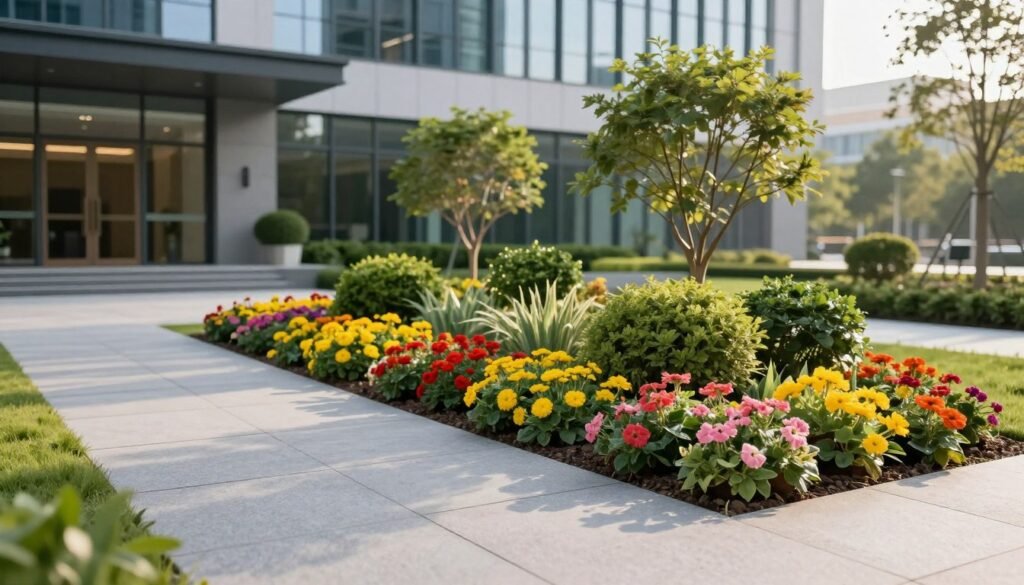
A narrow planting strip beside a busy entrance may matter more to a business than a large lawn visitors rarely use. Good landscape design starts with how people reach, enter, and use the commercial property.
Small commercial landscape design can direct visitors to an entrance, provide a place to sit, or complement a building’s architecture. A greenscape plan uses planted areas and other green features as part of the property’s overall layout.
Map customer and employee routes before choosing features. A planting bed can guide people away from a loading zone, while a clear path can link parking to the main door. Avoid placing attractive features where they narrow a route or block a needed view.
The design also shapes a brand impression. Formal lines may suit a traditional office, while a softer mix of plants may fit a less formal business. Choose elements that work with the building rather than compete with its scale, materials, or main entrance.
Accessibility affects both the layout and daily use of outdoor spaces. Keep paths clear and consider where people wait, turn, and gather. A design team should understand the property’s accessibility needs before setting path widths or seating locations.
Maintenance capacity belongs in the goal list, too. A detailed planting plan can ask for more labor, water, and upkeep than the property can support. Match plant choices and hardscape features to the staff, budget, and systems available for care.
A limited footprint can still do several jobs without crowding circulation. Prioritize a clear entrance, a safe path, useful shade, or one small seating area. A commercial landscape design consultation may help you discuss those needs with a provider serving Roanoke properties.
Write down the two or three outcomes the design must deliver before approving a concept.
What Site Information Belongs in the Design Brief?
A design brief should record property boundaries, existing features, site systems, access limits, and stakeholder needs. A designer needs this detail to fit the plan to the actual property, not an imagined site.
A property overview can list the property name, address, type, approximate acreage or maintained area, major zones, site map, contract start date, and term. Identify the building areas, outdoor spaces, and owners or tenants whose use may affect the plan.
Existing conditions and constraints
Walk the site with the design team and record visible features alongside known system information. Use this checklist to organize the visit:
- Boundaries and maintained areas: mark property lines, service limits, and each zone.
- Existing trees and plants: note turf, shrubs, tree locations, and established beds.
- Irrigation and drainage: show zones, drains, wet spots, and runoff paths.
- Utilities, paths, and hardscape: mark lines, walkways, curbs, walls, and paving edges.
- Access, sun, shade, and constraints: record gates, work routes, shade patterns, and restricted areas.
For each major asset, note its condition and whether it must remain, move, or receive protection. Existing structures can include signs, benches, lighting, fences, loading areas, and service doors. Mark drainage-sensitive areas where soil stays wet or water crosses a path.
Property assets and stakeholder priorities
Ask the facilities lead, tenants, and other key stakeholders what site uses cannot be disrupted. Their needs may include delivery access, quiet areas, safe customer routes, or clear views from the building. Record conflicts instead of assuming one use takes priority.
Confirm the intended contract start date and term, especially if installation and care begin at different times. A site map should show approximate maintained area and major zones. Add a date and revision note so the team can tell whether the map reflects current conditions.
Keep photos tied to a location on the map, such as the west entry or loading area. This makes a reported issue easier to locate during a walk-through. Mark each maintained zone on the site map and identify the person authorized to confirm its boundary.
Which Commercial Landscape Design Ideas Work for Business Properties?
A tree-lined route can make an entrance easier to find while giving a large paved forecourt a more welcoming scale. The best commercial landscape design ideas solve a site need and fit the building’s use.
Commercial landscape design examples include a defined entrance, a planted walkway, layered native plants, a shaded seating area, a green wall, targeted lighting, or a water feature where suitable. Each choice should have a clear reason tied to the property and its users.
Planting and hardscape that guide movement
A planting strip can mark the edge of a walkway and help visitors find the main door. Place shrubs where they guide movement without hiding signs or blocking sight lines. A hard path can make the route legible from parking to the building.
Layered native plants can give a bed depth while supporting a planting plan suited to local conditions. Use taller plants away from windows and lower growth near signs or corners. Native plants still need the right light, soil, and space to thrive.
Hardscape elements also shape how people move. A low wall may separate seating from a walking route, while paving can define a gathering space. Choose materials that suit the building’s architecture and the level of foot traffic they will face.
Seating, lighting, and water-conscious features
A shaded seating area can give employees or customers a place to pause. Put seating where people can reach it without crossing service lanes. Trees can provide shade over time, while a built shade structure offers cover sooner.
A green wall can add planting where ground space is tight, but it needs access for care and water. Targeted lighting can guide people along walkways or highlight an entrance after dark. Aim fixtures at the needed route, not at windows or neighboring spaces.
A water feature may suit a broad courtyard with space for safe access and ongoing care. On a smaller site, water-conscious irrigation and drought-tolerant plant choices may better fit the needs. These features can support a brand impression, gathering, traffic flow, visitor appeal, architecture, or water and energy goals.
Balance beauty with the site’s ability to support the design. A large tree near a utility line or too close to a building can create future conflicts as it grows. Check the mature size of every tree and shrub against the available space before approving its placement.
When Should Roanoke Landscape Work Happen Through the Year?
A Roanoke calendar should use local frost timing as a planning reference, not as a promise that every year will follow the average. Schedule plant and water-system work around season, site conditions, and the task involved.
Roanoke Regional Airport’s average last spring frost date is April 9, and its average first fall frost date is October 27. Both figures use 1991-2020 climate normals and a 30% probability threshold; the listed growing season is 200 days under the same conditions.
| Season | Local timing reference | Planning focus | Contract scheduling note |
|---|---|---|---|
| Spring | Average last frost: April 9 | Planting, bed preparation, and system checks | Set dates with weather and soil conditions in mind |
| Summer | Within the 200-day growing season | Water needs, heat stress, and growth | State how heat or dry weather may shift visits |
| Fall | Average first frost: October 27 | Leaf cleanup and winter preparation | Allow timing to change with leaf drop and weather |
| Winter | Outside the listed growing season | Review damage and plan spring work | Set limits for frozen ground and unsafe access |
For planning, the Roanoke frost and growing-season averages describe climate normals, not a forecast for a specific date. Elevation, slope, sun exposure, and shelter can make one property warmer or colder than another.
Plant type also matters. A sensitive new planting may need different timing from an established tree or a hardy shrub. State which weather events can delay a task and who will reset the schedule.
A contract should allow the provider to report a weather delay and propose a new date. That keeps the expected service clear without treating a calendar date as a guarantee. Require the contractor to confirm weather-sensitive work dates against actual site conditions.
Which Maintenance Services Should the Contract Specify?
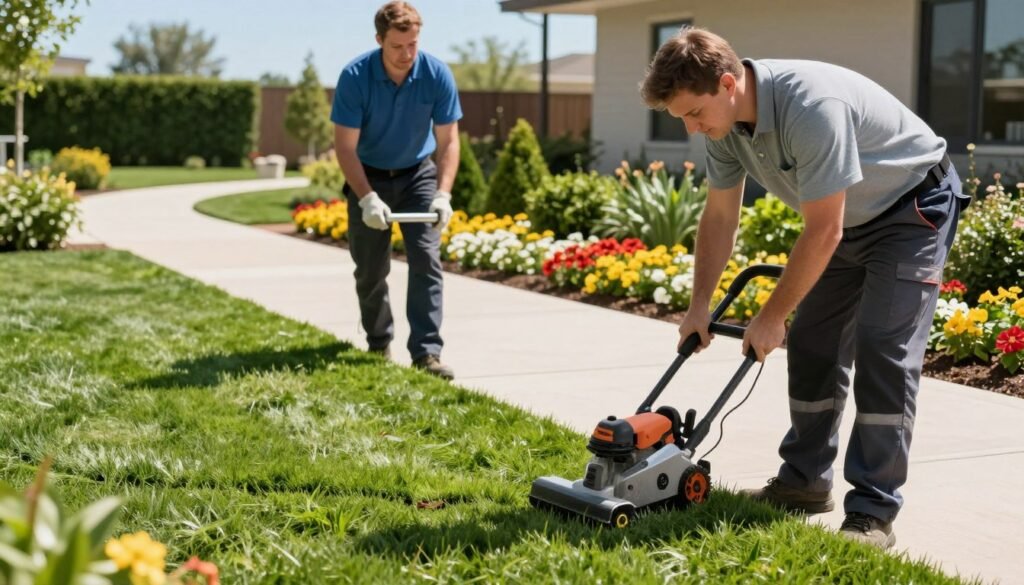
U.S. commercial landscaping services commonly cover turf, beds, shrubs, trees, cleanup, inspections, irrigation, and seasonal work. Your agreement should name each included task and set a measurable frequency and completion standard.
“Weekly landscape maintenance” does not tell a manager whether shrub pruning, trash pickup, or leaf removal is included. A written roster can prevent gaps, especially when more than one provider serves the property.
Routine turf and bed care
Use the service groups below to check every task. For each item, state whether it belongs in the base contract, how often it occurs, and when the work stops or changes with the season.
- Turf care: define mowing, trimming, and the expected cut and finish.
- Edging and hard-surface cleanup: state which edges are cut and which surfaces are cleared.
- Bed and weed control: identify beds, weed methods, and limits on hand or product treatment.
- Shrub, grass, and groundcover care: name the plants and grooming standard.
- Trees and debris: set limits for sucker removal, leaves, litter, and fallen branches.
- Inspections and seasonal work: define checks, cleanup windows, and reports.
Do not rely on “as needed” as the only frequency. It does not say who decides that work is due, what condition triggers service, or how quickly the provider responds. Use a set visit interval or a clear condition and response time.
Seasonal cleanup and inspection duties
Seasonal tasks need their own limits. State which beds receive mulch, how debris is handled, and whether trash removal covers the full site or selected areas. Define whether the provider removes green waste or leaves it in a designated place.
Set a standard the manager can observe, such as clear walks after service or trimmed shrubs kept within marked limits. Name exclusions such as storm cleanup, large branch removal, or plant replacement. If excluded work is billed separately, state how the provider reports it and obtains approval.
Inspections can check plant stress, drainage concerns, damaged irrigation parts, and access issues. A brief service record should note completed work and problems that need owner attention. Put the service frequency and completion standard beside every task, rather than relying on a general promise to maintain the grounds.
How Should Plant, Irrigation, and Pruning Duties Be Assigned?
Your contract should name who waters plants, checks irrigation, approves repairs, replaces failed plants, and decides pruning limits. These duties need clear owners because a scheduled controller can run while one area dries out.
A controller may run on schedule while a broken head leaves one planting area dry and another oversaturated. A defined inspection and reporting path can catch both failures before they harm more plants or cause runoff.
State who sets irrigation-controller schedules and who may change them. The agreement should say who checks heads and valves, reports leaks or poor coverage, and decides whether a repair is needed. Record who may adjust watering as plants mature or weather changes.
Plant replacement terms should identify which plants the provider replaces, the conditions that count as failure, and who pays for replacement. A plant can struggle because of water, soil, exposure, damage, or poor establishment. Document the observed cause before assigning responsibility.
Include water use and runoff in the work standard. A broken head can waste water or send it across a walkway, while too little coverage may stress native plants. Ask the provider to report pooling, erosion, or repeated dry areas, not just visible equipment damage.
Pruning terms should separate three kinds of work. Routine grooming removes light growth to keep a plant neat. Structural pruning changes branch shape or supports long-term form. Height-control pruning limits growth near signs, paths, or building features.
Those tasks call for different skill and approval levels. Name which pruning the base contract covers, which requires owner approval, and who may remove a hazardous limb. Set a plant-specific limit when a general height rule could harm the plant or block a sign.
Local exposure and mature size can change how often plants need water or pruning. Record the plant list and note special care instructions where known. Name the person who can approve an irrigation repair before the contractor incurs a charge.
What Virginia Pesticide Licenses and Supervision Rules Apply?

Paid pesticide applications on another person’s property in Virginia must be performed by applicators working for a licensed pesticide business. Your contract should identify the responsible business and applicator before treatment begins.
A pest-control line in a landscape proposal should identify who applies the product and who is legally responsible for that work. Category 3A covers ornamental plants, including landscape trees, shrubs, and herbaceous plants. Category 3B covers ornamental turf, including parks and residential lawns.
| Applicator or category | Covered work | License or supervision condition |
|---|---|---|
| Category 3A | Ornamental plants, trees, shrubs, and herbaceous plants | Commercial applicator works for a licensed pesticide business |
| Category 3B | Ornamental turf, parks, and residential lawns | Commercial applicator works for a licensed pesticide business |
| Registered technician | General-use pesticide applications | May apply without supervision; restricted-use work needs commercial-applicator supervision |
A Virginia registered technician may apply general-use pesticides without supervision. Restricted-use pesticide applications require supervision by a commercial applicator. The work and product determine which credentials and oversight apply.
The contract should name the pesticide business that takes responsibility for paid applications and identify the applicator expected to do the work. Ask the provider to describe the treatment scope, target area, and who will receive the service record.
Keep pesticide treatment separate from general grounds care if the regular provider does not perform it. The agreement can state whether treatment is excluded, requires a separate quote, or needs written approval for each application. This helps prevent an assumed treatment from appearing on a bill.
Review the Virginia pesticide business license rules and confirm the applicator’s category matches the proposed work. Verify the pesticide business license and the applicator’s relevant category before authorizing treatment.
When Does Virginia’s Land-Disturbance Threshold Apply?
Virginia’s small-construction definition applies to qualifying land disturbance of at least 1 acre and less than 5 acres. It can also cover qualifying work within a larger common plan of development or sale.
Land disturbance includes clearing, grading, excavating, or filling that may cause soil erosion or change runoff. Mowing or replacing plants is different from regrading a drainage area, which can alter how water moves.
Virginia excludes routine maintenance from the small-construction definition when it maintains a facility’s original line and grade, hydraulic capacity, or purpose. That distinction depends on the work performed, not simply whether the project is called maintenance.
| Case | Work description | Threshold consideration |
|---|---|---|
| Qualifying land disturbance | Clearing, grading, excavation, or filling across 1 to less than 5 acres | Small-construction definition may apply |
| Common plan | Qualifying disturbance within a larger development plan | Review the connected plan, not only one work area |
| Routine maintenance | Work preserves original line, grade, capacity, or purpose | Excluded from the small-construction definition |
A small planting job can still involve soil movement, and a drainage repair can affect runoff beyond the work zone. The scope should state the area, depth, and type of soil work, plus any changes to drainage systems.
For a project near the threshold, keep a clear plan of the disturbed area and related phases. Confirm project-specific obligations with the appropriate Virginia authority before work begins. Describe proposed grading and drainage work precisely in the scope before deciding whether it is routine maintenance.
How Should Contract Pricing and Extra Work Be Written?

Write the base contract price beside the work, frequency, and assumptions it covers. Require written change authorization before any extra work starts, so a field request does not become an unexpected bill.
Two proposals cannot be compared fairly if one includes seasonal cleanup and the other treats it as extra work. Scope, maintained area, service frequency, plant or material choices, site access, and irrigation needs can all change a proposal.
Base-contract pricing and service assumptions
Ask each bidder to price the same defined work. The price should show recurring services and how billing works during periods with fewer scheduled visits. List any assumptions about access, water supply, work hours, or the condition of existing systems.
The U.S. landscaping industry had more than 692,000 businesses, a 4.8% increase from 2024. The global grounds services market was projected at USD 357.2 billion in 2026. Those figures describe an industry, not the fee for a particular site or proof that a provider fits your needs.
Allowances, exclusions, and approved extras
Use this checklist to make the proposal’s price easier to understand:
- Base service price: state the amount and billing interval.
- Frequency and seasonal assumptions: list visits and timing limits.
- Materials and disposal: say what supplies, hauling, and fees are included.
- Exclusions and allowances: name excluded work and any capped amounts.
- Extra-work approval and billing: state who approves, how rates are set, and when invoices follow.
An allowance sets an amount for a known but unpriced item. An exclusion names work outside the bid, such as major repairs or storm cleanup. For either, state what happens if the actual need exceeds the allowance or falls outside the stated scope.
Request separate pricing for a one-time installation or renovation when it has different deliverables, timing, or approval needs from recurring care. Folding a project into monthly service can obscure its cost and completion point. Keep the project schedule and acceptance terms distinct from routine visits.
Require a written description, price, and approval record for each extra. The approval should identify the work, the person authorizing it, and any timing change. Require written change authorization before any out-of-scope work starts.
Which Insurance and Safety Clauses Protect a Commercial Property?
Review general liability, workers’ compensation, and commercial auto coverage before crews enter the site. Set clear rules for access, visitor protection, incident reporting, subcontractors, and keeping paths open.
A crew can perform the contracted work correctly and still create risk if equipment blocks a busy entrance. Safety terms should address the property’s actual routes, work zones, and times of heavy customer traffic.
Ask your insurance broker and legal adviser to confirm coverage limits and required endorsements. Do not guess at a limit or assume that a certificate of insurance changes the policy. Require current certificates and additional-insured wording when your agreement or adviser calls for it.
State whether subcontractors may work on site and what insurance and safety terms they must meet. Name the party responsible for checking their documents. Require prompt incident reports for injury, property damage, spills, or blocked access.
Set rules for equipment and vehicle entry, parking, storage, and removal. Tell crews which doors, loading zones, or walkways must stay open during service. The provider should protect visitors from tools, vehicles, and work areas without making an accessible route unusable.
The Americans with Disabilities Act (ADA) and Occupational Safety and Health Administration (OSHA) rules are useful references for access and workplace safety. Qualified advisers should review how those rules apply to the site and work. A contract clause alone cannot ensure compliance.
Include a site contact and an urgent reporting method for hazards. A manager should know who can pause work if a spill, blocked exit, or unsafe condition appears. Confirm that insurance documents and site-specific safety procedures are current before the first service visit.
How Can a Property Manager Compare Landscape Proposals?

Compare landscape proposals by giving every bidder the same property details, service scope, schedule, exclusions, and evaluation rules. A low bid is difficult to judge when one vendor prices the full site and another prices only its visible frontage.
Use a consistent request for proposals (RFP), meaning the same written request goes to each business. Include a property overview, site map, contract start date and term, proposal deadline, and the work you expect bidders to price.
Build a consistent request for proposals
Include the same requirements in each request. A complete RFP should identify covered properties and areas, required services, service frequency, inclusions and exclusions, and evaluation criteria. Attach maps and note any areas with special access or use needs.
Use this checklist to prepare the request:
- Coverage and site map: show each property and maintained zone.
- Service frequency and standards: state visit timing and completion measures.
- Inclusions, exclusions, and extras: define included work and approval needs.
- Experience and staffing: request relevant commercial-site work and team details.
- Evaluation method and deadline: state how bids will be scored and when they are due.
Send every vendor the same property name and address, type, approximate acreage or maintained area, major zones, map, start date, term, and submission deadline. Add the service list, expected frequency, and any boundaries that affect access.
Evaluate scope, staffing, and site fit
Check whether each proposal addresses the actual site instead of relying on broad promises. A useful bid points to specific zones, describes how scheduled work will be done, and names the staff or supervisor who will manage service.
Ask for relevant experience with similar commercial properties, such as sites with public entrances, shared access, or complex planting beds. Compare proposed staffing and communication plans with the needs of your clients, employees, and customers. Experience matters when it matches the work, not just when a company makes a general claim.
Set evaluation rules before bids arrive. You might score scope coverage, service plan, staffing, communication, and price using the same written criteria. If a proposal leaves out an item, record that gap rather than silently treating the item as included.
Some owners request a walk-through or a short clarification meeting before final selection. Give each bidder the same chance to ask questions and share answers with all participants when they affect the scope. Score each proposal against the same written requirements before discussing a preferred vendor.
Conclusion
The most useful contract is the one that makes the work, schedule, and approval path clear to everyone responsible for the site. Measurable duties help you check performance, while written change authorization keeps extra work under owner control.
Assemble the property map and current service list, then use them to prepare a consistent contract scope. Before requesting proposals, walk the property with the facilities lead and mark the areas the contract must cover.